
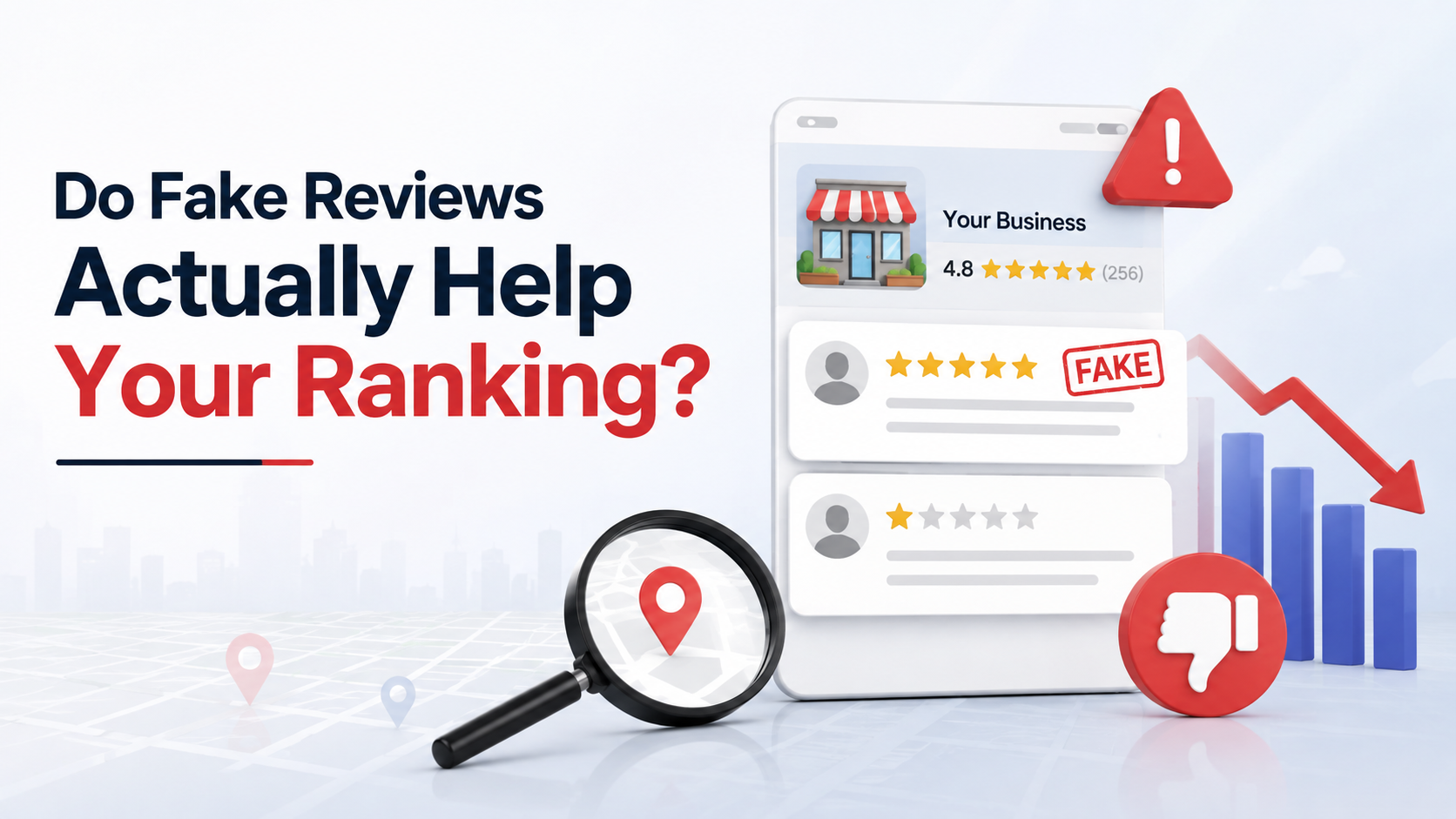
Why it seems like it should work
Review count and rating are visible, easy-to-understand numbers, and there’s a real correlation between businesses with more reviews and businesses that rank well. It’s tempting to read that backwards, as if adding reviews artificially causes the ranking. But correlation isn’t causation here, and Google has spent years building detection specifically aimed at exactly this shortcut.
What Google actually looks at
Fake or purchased reviews tend to share detectable patterns: they arrive in unnatural bursts (fifteen five-star reviews in two days after months of nothing), they come from accounts with no other review history or a suspiciously similar review pattern across unrelated businesses, and they’re often generic (“Great service! Highly recommend!”) without specifics that a real customer’s review usually includes. Google’s review system is built to catch exactly these signals, and removed reviews don’t just disappear quietly, they can also trigger a closer look at the rest of your profile.
The real risk isn't a wasted purchase
What genuinely moves the needle instead
- Ask at the right moment. The best time to ask for a review is right after a positive interaction, when a customer collects a completed job, checks out happy, or gets a resolved support ticket, not three weeks later in a generic email blast.
- Make it a two-tap process. A direct review link (or a QR code at the counter) that drops the customer straight into the review box removes almost all the friction that stops people from finishing a review they intended to write.
- Respond to every review, not just the five-star ones. This does two things: it signals to Google that the business is actively managed, and it shows future customers reading your profile that you take feedback seriously, negative reviews included.
- Never filter who you ask. Google’s policies prohibit selectively soliciting reviews only from customers you expect to rate you well. Ask everyone, consistently, and let the ratings reflect reality.
What to do about a negative review, real or fake
A real negative review deserves a real, specific reply, not a copy-pasted apology. Acknowledge what they said, explain what you’re doing about it if applicable, and take it offline for resolution if it needs more detail. If a review looks fabricated, unrelated to your actual business, posted by a competitor, or clearly violates Google’s policies, you can flag it for review directly from your Business Profile; Google does remove reviews that violate its policies once flagged and verified.
The honest bottom line
A profile with 40 genuine reviews averaging 4.3 stars, with thoughtful responses to the handful of critical ones, outperforms a profile with 40 purchased five-star reviews almost every time, both in ranking (because the pattern reads as authentic) and in actual customer trust (because people can usually tell). It’s slower to build. It’s also the only version that doesn’t put your listing at risk.