
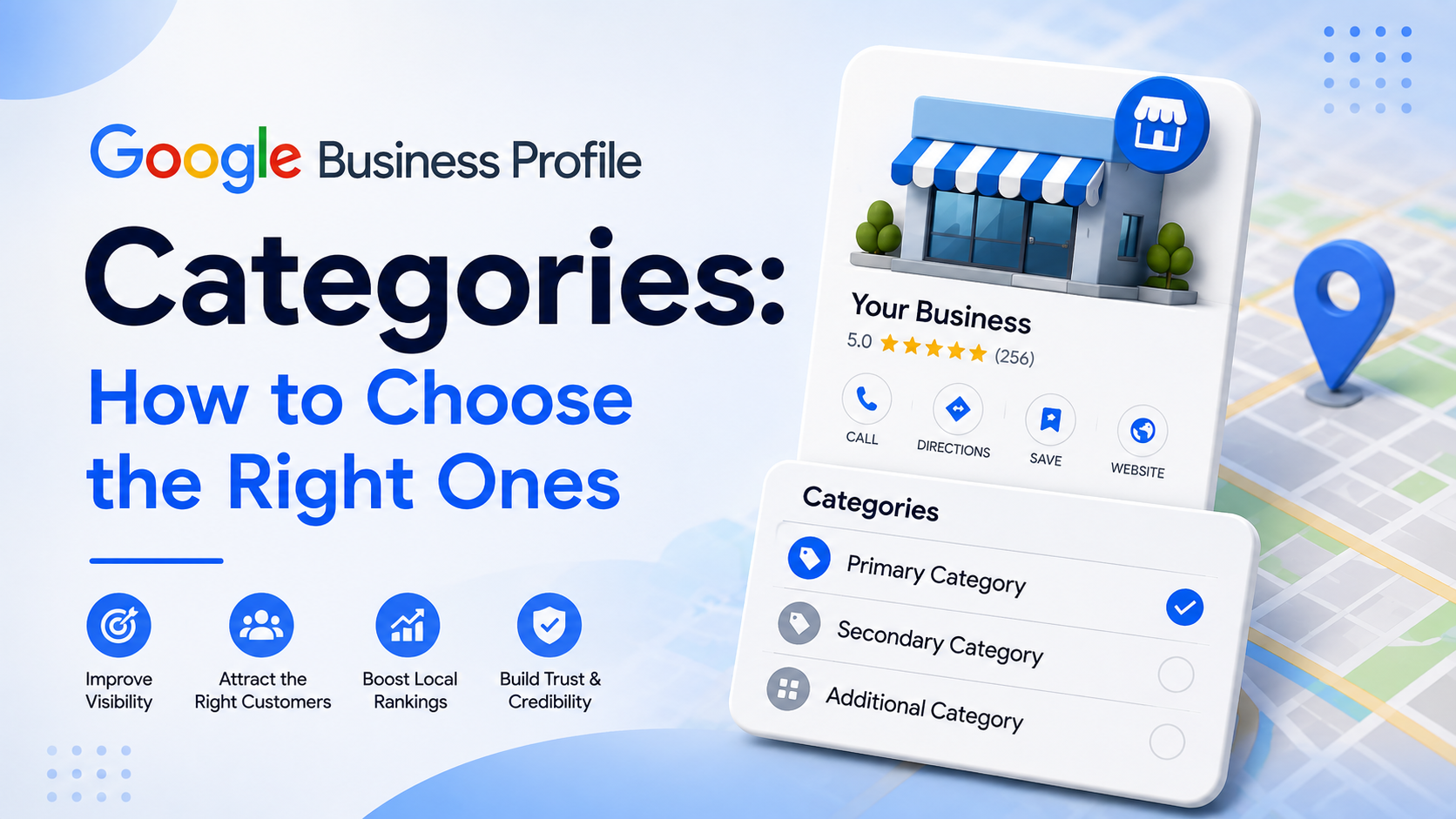
Why category outweighs almost everything else
Your primary category is one of the strongest signals Google uses to decide which searches your profile is even eligible to show up for. Get it wrong, and no amount of good photos or reviews fully compensates, because you’re simply not being considered for the searches that matter. A bakery that’s categorized as “Restaurant” instead of “Bakery” isn’t being punished exactly, it’s just competing in the wrong pool, against businesses with a genuinely different customer intent behind their searches.
Primary category: pick the most specific accurate match
The instinct to pick a broad category (“Store” instead of “Hardware Store,” “Doctor” instead of “Dermatologist”) usually comes from a hope that broad means more visibility. It’s backwards. Google’s category list is deliberately granular so that a specific match connects you to a more relevant, higher-intent search. A dermatologist categorized correctly competes against other dermatologists for “dermatologist near me.” Categorized as “Doctor,” they compete in a much wider, less relevant field, and rank worse for the searches that actually convert.
A practical way to find the right one: search for your business type on Google Maps in your own city, see what category the top few genuinely-matching competitors use (you can see a business’s primary category by checking the category text right under its name in its Maps listing), and treat that as your starting point, adjusted for what’s actually true of your business.
Secondary categories: add what’s genuinely true, skip what’s aspirational
Secondary categories widen the searches you’re eligible for, but only add ones that reflect services you actually, currently offer. A restaurant that also does outdoor catering can reasonably add “Caterer” as a secondary category. The same restaurant adding “Wedding Venue” because they hosted one event once is stretching it, and if a customer arrives expecting venue services you don’t really offer, that mismatch shows up in reviews and complaints, which costs you more than the extra visibility was worth.
A quick self-check
Common category mistakes we see in audits
- Copying a competitor’s category exactly, without checking it fits. Competitors get their own categorization wrong often enough that copying isn’t a safe shortcut.
- Leaving the default category from initial signup. Many businesses get auto-suggested a generic category during setup and never revisit it once the listing is live and getting traffic.
- Using a category to describe a specialty instead of a business type. “Organic,” “Affordable,” or “24 Hour” belong in your business description and attributes, not stretched into a category field that’s meant to describe what kind of business you are.
- Ignoring category changes as the business evolves. A shop that started as a general store and now mostly sells electronics should update its primary category to reflect that shift, not leave it stuck at what was accurate three years ago.
What to do if you’re genuinely between two categories
Some businesses legitimately straddle two categories, a combined cafe and bookstore, for instance. In that case, make the primary category match whichever side of the business drives more actual revenue and search intent, and use the secondary category slot for the other. If they’re close to equal, look at which category has less local competition, since that’s often the faster path to actually ranking rather than being buried under twenty similar businesses.