
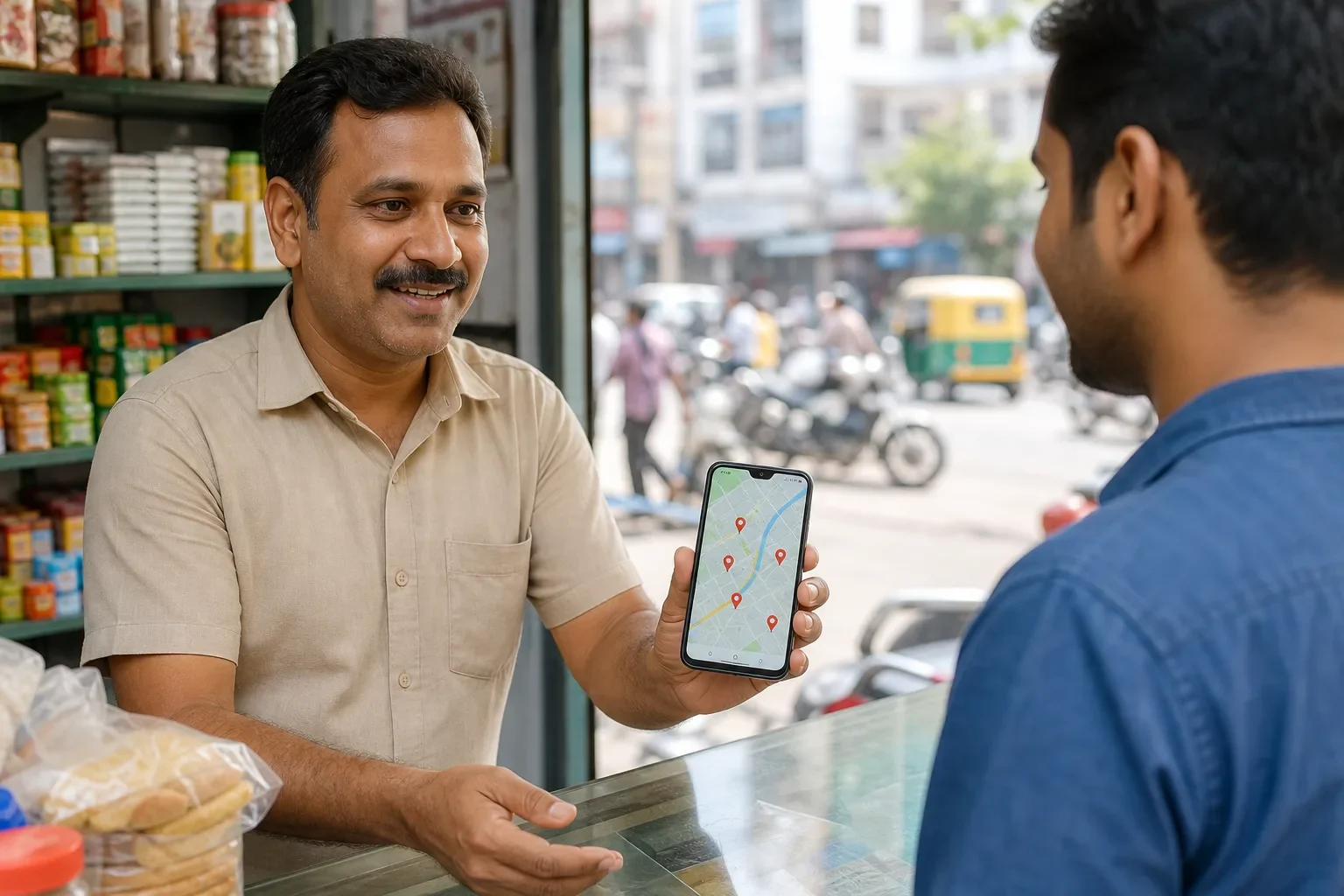
Understanding how Google Maps ranking works saves you from wasting money on things that do not matter. Google has said openly that local results are based on three things: relevance, distance and prominence. Every tip you will ever hear about ranking on Maps comes back to one of these three. This guide explains each in plain words and shows where a local business owner should put their effort.
In this guide
The three factors at a glance
| Factor | What Google asks | Can you change it? |
|---|---|---|
| Relevance | Does this business match what the person searched for? | Yes, mostly |
| Distance | How far is the business from the searcher, or from the area named in the search? | Hardly at all |
| Prominence | How well known and well regarded is this business? | Yes, over time |
Google combines these. A business that is a little further away can still appear first if it is much more relevant or prominent than the nearer options.
1. Relevance: do you match the search?
Relevance is about how well your profile matches what someone is looking for. If a person searches “AC repair”, Google looks for profiles that clearly offer AC repair.
What shapes relevance:
- Primary category. This is the strongest signal you control. “Air conditioning repair service” tells Google far more than “Service establishment”. Our guide on choosing GMB categories goes into detail.
- Additional categories. Add only the ones that describe what you really do.
- Services and products. List them with clear names that match how customers talk.
- Business description. Describe what you do and where, in normal sentences. Do not stuff it with keywords.
- Your website. A website that clearly describes your services and location supports the profile.
One thing that does not help in the long run: adding keywords to your business name. It is against Google’s guidelines and a common cause of suspension.
2. Distance: how close are you?
Distance is how far your business is from the person searching, or from the place they named (“dentist in Dharampeth”). If the search has no place in it, Google uses what it knows about the searcher’s location.
This is why your ranking looks different from different parts of your city. A shop in Sitabuldi might rank first for someone standing nearby and not appear at all for someone searching from the other side of Nagpur. That is normal, not a problem with your listing.
You cannot move your shop, but you can make sure Google knows exactly where you are:
- Put the map pin on your exact entrance.
- Use the same address on your profile, website and other listings.
- If you visit customers rather than the other way round, set realistic service areas (see service area businesses).
3. Prominence: how well known are you?
Prominence is how established and trusted your business looks to Google. Some of this comes from the real world: well-known landmarks, brands and long-running businesses tend to be prominent. Much of it comes from signals online.
What shapes prominence:
- Reviews. Google has said that the number of reviews and the rating are part of local ranking. Steady, genuine reviews matter more than a sudden burst. Fake reviews carry real risk; see our post on fake reviews and ranking.
- Replies to reviews. Replying shows an active, responsible business, and it helps the next customer decide.
- Mentions around the web. Your business appearing on directories, local news, association pages and other websites, with consistent details.
- Your website’s strength. Google has said a business’s position in ordinary web results also plays a part.
- Activity on the profile. Fresh photos, regular Google posts and up-to-date hours show a real, open business and give searchers more reasons to choose you.
What does not decide your ranking
Where to focus first
- Get the basics right (relevance): the correct primary category, complete services, accurate hours, a clear description. This is often the quickest win.
- Fix your location details (distance): exact pin, consistent address, sensible service areas.
- Build prominence steadily: ask every happy customer for a review, reply to all reviews, add real photos and post regularly.
Ranking changes take time. Our post on how long GMB ranking takes explains what to expect. And if your listing is not appearing at all, even for your own name, that is a different problem: start with why a business does not show on Google Maps.
Frequently asked questions
What are the main Google Maps ranking factors?
Google says local results are based on relevance (how well your profile matches the search), distance (how close you are to the searcher or the place named) and prominence (how well known and well reviewed your business is).
Why does my ranking change depending on where I search from?
Because distance is one of the three factors. Google shows businesses near the person searching, so your position naturally changes across different parts of the city.
Do Google reviews affect Maps ranking?
Yes. Google has said that review count and rating are part of prominence. Genuine reviews collected steadily over time, with replies from you, help both ranking and customer trust.
Can I pay Google to rank higher on Maps?
No. Google Ads can show your business in sponsored positions, but the free map results cannot be bought. They depend on relevance, distance and prominence.
Does adding keywords to my business name help?
It may seem to help briefly, but it breaks Google's guidelines and is a common reason for suspension. Use your real business name and put your services in categories, services and the description instead.